Direct Debit Check: How I Saved €140 by Cleaning Up Subscriptions

Reading time: 7 minutes
When I went through my bank statements in February 2024, I gasped: €17.99 for a streaming service I hadn't used in eight months. €9.99 for a fitness app whose login I had long forgotten. In total, seven forgotten subscriptions were quietly taking €140.73 a month out of my account. That was the moment I decided to check my direct debits and take back control.
Automatic withdrawals are convenient, but that very convenience was my downfall. According to an analysis by the Federation of German Consumer Organizations (Verbraucherzentrale Bundesverband), German households pay an average of €80 to €150 a month for subscriptions, at least two of which they don't actively use. That's over €1,000 a year that simply trickles away.
Why automatic direct debits turn into subscription traps
The psychology behind subscription traps is simple: once signed up, these contracts vanish from our awareness. The withdrawal happens automatically, no letter reminds us, no invoice lands in the mailbox. For example, I had a magazine subscription for €6.50 a month that I'd signed up for in 2022 while waiting at a train station in Munich. Two years later it was still running, even though I hadn't read a single issue.
Free trial periods that automatically convert into paid subscriptions are especially treacherous. My Apple Music trial quietly turned into a €10.99 subscription, even though I had long since switched to Spotify. Providers deliberately bank on this inertia, because every forgotten customer means passive income without anything in return.
My 4-step method for checking direct debits
In March 2024 I developed a system to identify all the hidden withdrawals. This method cost me three hours of time but saved me over €140 a month.
Step 1: Create a complete inventory
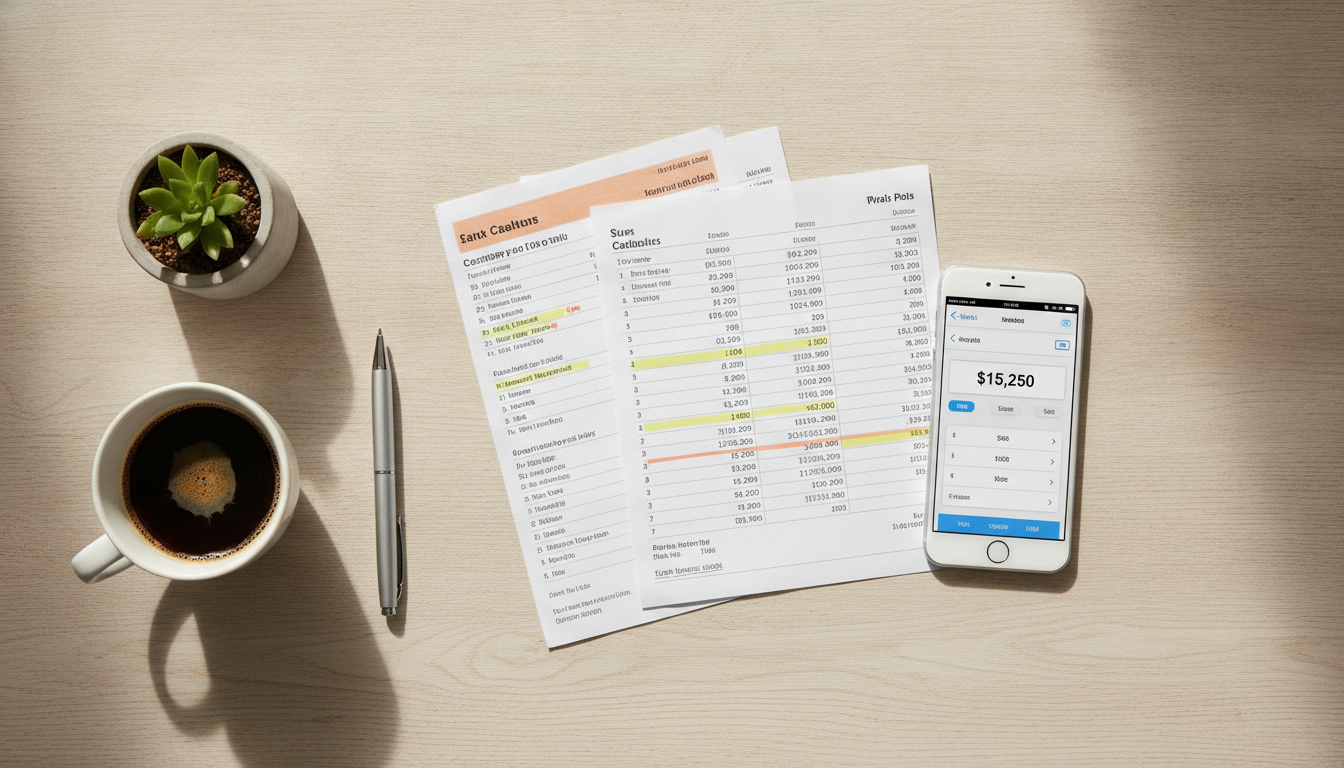
I downloaded my bank statements for the last twelve months as PDFs and marked every direct debit with a highlighter. Some subscriptions only charge quarterly, others annually. Only by analyzing a whole year did I recognize all the patterns. I used my online banking at Sparkasse for this and exported the transaction list as an Excel file.
In doing so I found a charge of €89.99 in July 2023 that meant nothing to me at first. After some research it turned out to be: an annual fee for a domain I had registered in 2021 but never used. Annual charges like this are especially easy to overlook.
Step 2: Categorize and evaluate every withdrawal
I sorted all direct debits into three categories: essential (rent, insurance), worthwhile (Netflix, which I use weekly) and expendable (anything I hadn't used for more than two months). This categorization helped me separate emotional decisions from rational ones. Similar to systematically categorizing my household expenses, this method made the financial dead weight visible.
For each expendable subscription I noted the cancellation date and the notice period. Many contracts renew automatically for twelve months if you don't cancel three months before expiry. I usually found this information in the fine print of the confirmation email or in the terms and conditions.
Step 3: Follow through on cancellations
Within a week I canceled seven subscriptions. For most I used the online cancellation form; for two older contracts I had to cancel by email with a read receipt. Important: I saved every cancellation confirmation as a PDF and filed it in a folder called "Canceled Subscriptions 2024".
- Fitness app (€9.99) – canceled 03/12/2024, effective 04/30/2024
- Streaming service no. 2 (€17.99) – canceled 03/13/2024, effective immediately
- Magazine subscription (€6.50) – canceled 03/14/2024, effective 05/31/2024
- Cloud storage (€4.99) – canceled 03/15/2024, effective 06/30/2024
- VPN service (€11.99) – canceled 03/15/2024, effective immediately
- Premium podcast platform (€7.99) – canceled 03/16/2024, effective 03/31/2024
- Domain hosting (€89.99 annually) – canceled 03/18/2024, effective 07/15/2024
Step 4: Withdraw from deceptive subscription traps
With two subscriptions I suspected they had come about through unfair methods. A "sweepstakes" in which I had supposedly won an iPhone turned out to be a subscription trap at €14.99 a month. Here I used my right of withdrawal under § 355 BGB (the German Civil Code) and demanded the last three months back, €44.97 in total. The consumer protection agency offers free template letters for this.
After a four-week reminder period, the provider actually paid it back. That success showed me: many dubious providers back down as soon as you argue on solid legal grounds.
Systematically tracking down hidden subscription traps
Some subscriptions disguise themselves cleverly. The charge appears under a cryptic company name that has nothing to do with the original service. "GRPAY LUX" on my bank statement was actually my forgotten premium podcast subscription. I had to google the payee to find out what it was about.
Another trick: staggered price increases. My streaming service cost €12.99 when I signed up in 2022, and by now it was €17.99. These gradual increases are barely noticeable but add up. Over two years I had paid €120 more than originally calculated.
Digital helpers for monitoring withdrawals

After my manual check I installed the app "Bobby" (free for iOS and Android), which manages all subscriptions in one place. I entered my remaining nine subscriptions and now get a push notification two weeks before each charge. That way I can decide in time whether to renew or cancel.
Alternatively, the app "Truebill" offers automatic subscription detection by linking to your bank account. For privacy reasons I don't use this feature, but for people with many accounts it can make sense. What matters is that such apps are updated regularly and are compatible with German banks.
Prevention: How to avoid new subscription traps
Since my subscription cleanup I've established three iron rules. First: I enter every new subscription into my Bobby app right away, including the notice period. Second: I set a calendar reminder four weeks before the cancellation deadline. Third: no subscriptions with automatic renewal when a manual alternative exists.
For trial periods I use virtual credit cards from providers like Revolut. I can delete these cards right after the trial, and the automatic charge then fails. That sounds radical, but it has saved me from three more unwanted subscriptions.
Much like optimizing my insurance policies, regular checks pay off. Now I review all my direct debits once a year, ideally in January when the new budget year begins.
What I do with the €140 I save each month
The €140.73 a month I save through the subscription cleanup now flows into a separate savings account at DKB. After twelve months that's €1,688.76 that I can put toward more worthwhile things. I invest part of it in continuing education I actually use, and put the rest aside as an emergency fund.
Having this concrete sum in mind motivates me to stay vigilant. Every time I'm tempted to sign up for a new subscription, I remember the €140 that disappeared unnoticed for months. That reminder works better than any good resolution.
Legal protection against stubborn providers
One provider ignored my cancellation and kept charging me anyway. I disputed the direct debit through my online banking within eight weeks of the charge. The bank immediately refunded €17.99. At the same time I sent the provider a written cancellation confirmation by registered mail with return receipt.
After the third disputed direct debit, the provider gave up. Important: you have to file the dispute again for every unauthorized charge. Not all banks offer a blanket direct debit block for a specific payee, but it works without problems at Sparkasse and Volksbank.
Frequently asked questions about checking direct debits
How often should I check my direct debits?
I recommend a thorough review once a year and a quick monthly check of your bank statements. That way you spot new charges immediately and can react within the withdrawal period.
What notice period applies to subscriptions?
The notice period is set out in the provider's terms and conditions, usually between one and three months before the end of the contract. For contracts concluded since October 2016, a statutory notice period of only one month applies after the first year (under German law).
Can I have direct debits reversed after the fact?
Yes, for authorized direct debits you have eight weeks to dispute them. For unauthorized charges it's even 13 months, but then you have to prove that you didn't approve the direct debit.
What should I do about subscription traps caused by misleading advertising?
Document the misleading advertising with screenshots, withdraw from the contract in writing and demand a refund of amounts already paid. The consumer protection agency helps free of charge with the legal assessment.
Is a subscription management app really worth it?
For me the free Bobby app was a relief, since I see all subscriptions in one place and get reminders. I don't need paid premium features; the basic version is completely sufficient.
My conclusion: checking direct debits always pays off
The three hours I invested in reviewing my direct debits in March 2024 were the best time investment of the year. Saving €140.73 a month works out to an hourly wage of over €560 for this work. No side job, no raise would have brought me so much so quickly.
The side effect: I now have a much clearer picture of my actual fixed costs. Combined with regularly keeping my household budget book, I have my finances under better control than ever. Every euro I spend is now a conscious decision, not an automatic outflow.
Take three hours this weekend and check your direct debits. Download your bank statements for the last twelve months, mark every automatic withdrawal and ask yourself whether you really use the service. Chances are high that you too will find at least €50 a month you can put to better use. Start now, your future self will thank you.